What is a Kombucha SCOBY: The Science Behind the Living Liquid
If you are just starting out with home brewing, there is one visual element of kombucha that raises more questions, concerns, and confusion than anything else: what is a kombucha SCOBY.
When you first look into a fermentation jar and see a thick, rubbery, alien-looking mass floating on top of your tea, it is easy to feel a little intimidated. Let’s clear up the biggest misconception in the brewing world right away so you can establish a solid baseline and start your first batch with complete confidence.
Kombucha SCOBY vs Pellicle: Getting the Terms Right
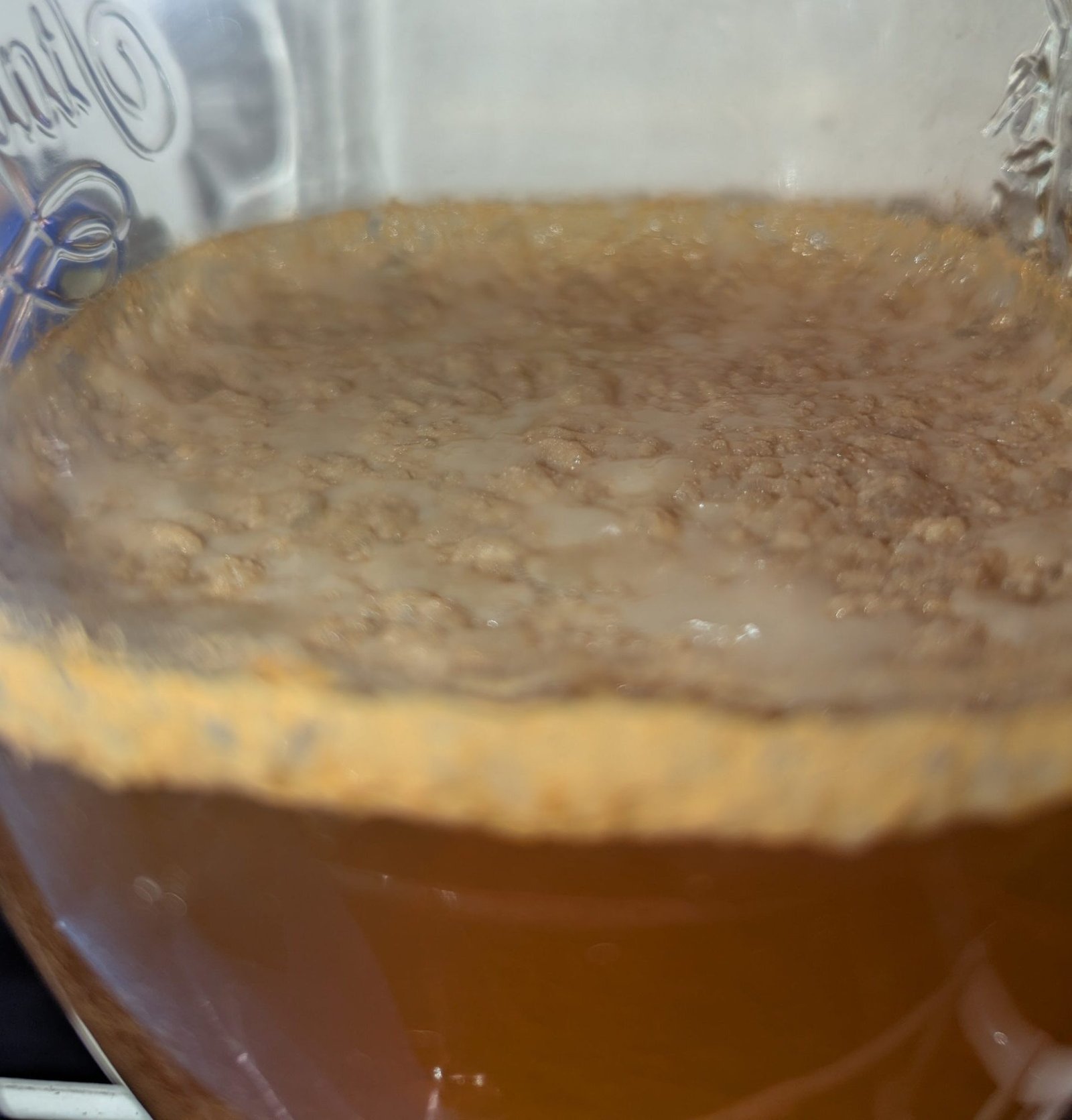
Most people use the acronym “SCOBY” (Symbiotic Culture of Bacteria and Yeast) to describe that fleshy, pancake-like disc floating at the top of the vessel. However, scientific analysis of commercial starter cultures demonstrates that this disc is actually a byproduct called the pellicle.
The actual SCOBY is the microscopic engine that is driving the entire fermentation process which is suspended throughout the acidic starter liquid itself.
- The Starter Liquid: This is the heavily fermented, unflavored kombucha saved from a previous batch. It contains the high concentration of living bacteria and yeast required to safely drop the pH of your sweet tea and kickstart the chemical reaction.
- The Pellicle: This is a cellulose byproduct created by the bacteria as they work. While it does house some yeast and bacteria within its spongy layers, it is an output of the process, not the primary driver.
Do You Actually Need the Pellicle to Brew?
Strictly speaking, no. If you have enough strong, highly acidic starter liquid, you can brew a perfect batch of kombucha without dropping a physical pellicle into your new jar. The bacteria in the liquid will naturally get to work, and a brand new pellicle will begin to form across the surface within a few days.
However, keeping a pellicle around serves a few practical purposes for your setup, especially if you are brewing in a kitchen where temperatures can shift:
- The Physical Shield: It acts as a protective barrier, blocking airborne dust, stray kitchen particles, or wild mold spores from reaching the vulnerable, sugary liquid below.
- Draft and Temperature Protection: In a smaller space where air conditioning drafts or heating vents might cause sudden temperature swings, the pellicle acts as an insulating lid.
- Oxygen Regulation: Fermentation requires a delicate balance. The yeast needs a certain amount of oxygen to consume the sugar, but too much exposure can throw off the bacteria. The pellicle breathes just enough to keep this exchange regulated.
Diagnosing a Healthy Brew
When you are obsessing over your process, the pellicle becomes your best visual dashboard. A healthy ferment is rarely perfectly smooth.
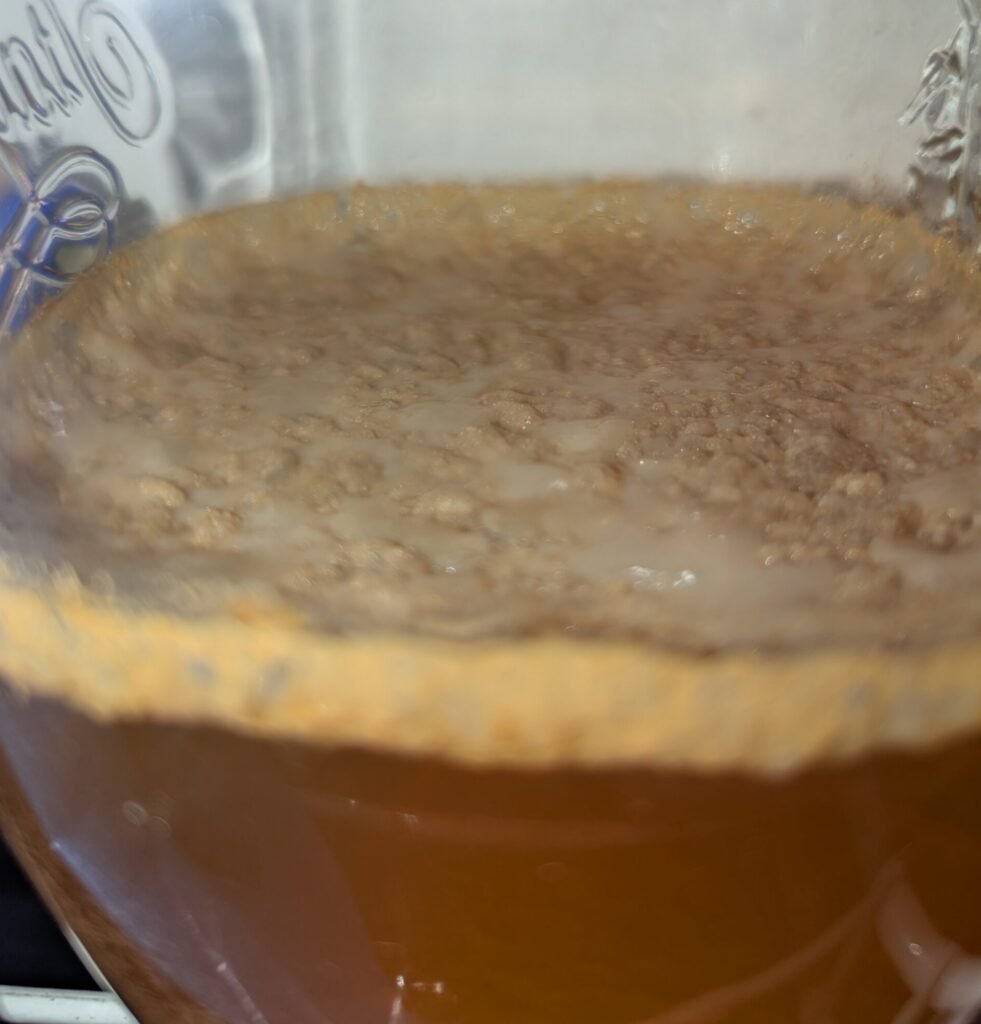
If you look closely at the surface of an active brew, you will notice it is incredibly textured. A thriving pellicle will be bumpy, uneven, and constantly shifting. You will likely see dark brown, stringy masses hanging from the bottom of it—these are just healthy yeast strands doing their job. You will also see pockets of air pushing up and creating dry bubbles on the surface. That trapped CO2 is the ultimate proof that your culture is actively consuming sugar and converting it into acidity and carbonation.
Remember the golden rule: healthy yeast is wet and stringy, while dangerous mold is dry and fuzzy. If you ever see the latter, you need to dump the batch and immediately re-evaluate how you clean and sanitize your equipment.
The Baseline of Your Brew
Mastering your process starts with understanding exactly what is driving the reaction. The cellulose mat on the surface is a highly useful byproduct and a great visual indicator of a healthy environment, but it is not the engine.
The true culture lives directly within the acidic starter liquid. Once you shift your focus away from the size and shape of the pellicle and start treating the liquid itself as your primary active ingredient, you gain a much better understanding of how to control your baseline and run consistent, successful batches.